Observer Essentials
Dove is a decentralized computer that orders and writes events from many sources into one chain.
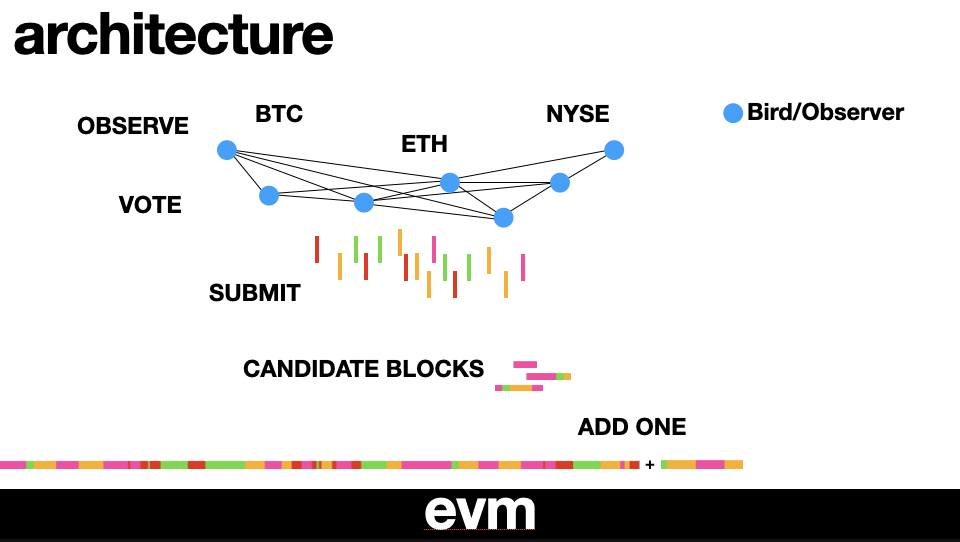
Observers play key roles in allowing us to achieve that. They include observing, timestamping and time-ordering certain events, collaboratively signing off on the events using Threshold tBLS signing, and submitting signed events to the Dove blockchain. Those event records are then made available on Dove and form the basis for applications that are built on Dove.
Why Run an Observer?
- Network Security & Decentralization: Make the network stronger, more decentralized and resilient to failures by running an observer!
- Trustlessness: Watch the events that are important to you and ensure they are verified correctly.
- Get paid: $DOVE is the native token for Dovechain, and observers will be paid for their observations.
Key Roles of an Observer
- Event observation, timestamping and ordering: Each observer subscribes to specific events on chains. For example, an observer can be watching for Uniswap swap events on Ethereum Mainnet, as well as BTC deposits to a particular address. They add the timestamp for when the event was observed, and order them according.
- tBLS (Threshold Boneh-Lynn-Shacham signature) voting: tBLS is the cryptographic protocol used by a Dove flock to collectively sign off on observed events. When you run a Dove node, you contribute to the flock's verifications.
- Event submission: Any bird can submit an event that has been signed off by a flock.
What to expect
- Join the bird council by staking: The BirdCouncil governs the flock of active birds. To join the council, new birds must stake more than the lowest staking member.
- Resharing Event: Once you have staked, the system begins to generate a key share for you, and old birds need to refresh their shares. The time taken to complete resharing depends on the number of birds in the council, but it should complete in 15 - 30 mins with our default settings.